Maximum monthly payment and principal-and-interest room at each target ratio
Target
Max PITIA
Room for P&I
What it signals
1.00x
$4,200
$3,240
Break-even: rent exactly covers the payment
1.10x
$3,818
$2,858
A common target between break-even and 1.25; floors vary by lender
1.15x
$3,652
$2,692
A common target between break-even and 1.25; floors vary by lender
1.25x
$3,360
$2,400
The comfortable file at most lenders
“Room for P&I” is what is left for principal and interest once taxes, insurance and dues are paid — the number a lender sizes the loan against. Take it to a lender with the rate you have been quoted and it becomes your maximum loan amount — the lender converts P&I room into it at whatever rate and term they quote, which is why a broker shops the same file to more than one. This program runs $150K – $10M, 1.0x+ minimum ratio, up to 80% LTV.
Estimates from the figures you entered. Not an appraisal, quote, pre-approval, offer or commitment to lend. NexWin Capital Corp. arranges financing through third-party lenders and does not set rates.
A DSCR loan calculator divides a rental property's monthly rent by its full monthly payment — principal, interest, taxes, insurance and any HOA dues. The result is the debt service coverage ratio, and at 1.0 the rent exactly covers the payment. Lenders set their own floor above or below that, and this page does not publish one for them. This one runs the calculation backwards as well: enter the rent and it returns the largest payment that rent supports at each common target, so you get an answer before anyone has quoted you a rate.
Hold-oriented capital
For income-producing assets and small-to-mid portfolios.
Acquisition, refinance, or portfolio capital for investors who hold. Structured around real cash flow and investor profile, not a one-size-fits-all box.
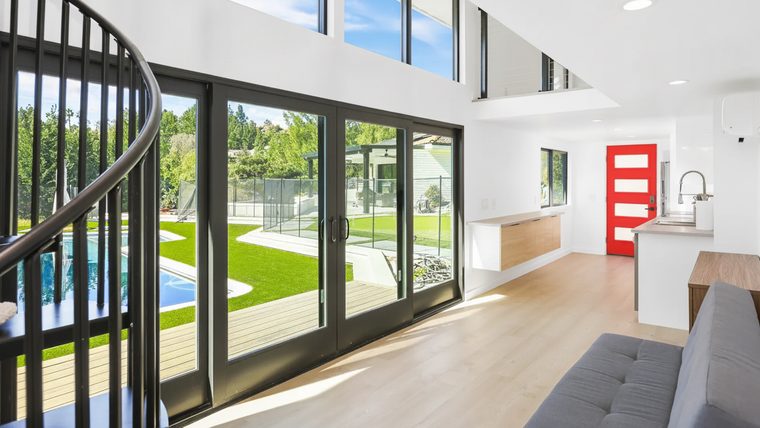
A finished rental-ready interior — the condition the rent, and the note it services, depend on.
The long read
Behind the ratio.
01
Why this one does not ask for an interest rate.
Most DSCR calculators will not return an answer until you give them a rate. That is the wrong question for the person doing the calculation.
01
You are calculating this to decide whether to apply
A rate arrives after an application, not before one. Asking for it first forces you to invent a number, and every property you model afterwards is quietly anchored to whatever you guessed. Some calculators in this field pre-fill a rate for you, which is the same problem with the guess made on your behalf.
02
The useful answer runs the other way
Given the rent a property actually commands, and the taxes, insurance and dues that come off it, there is a maximum monthly payment the rent supports at any target ratio. That figure — not the ratio itself — is what a lender sizes a loan against, and it is completely independent of rates. The tool returns it at four targets at once.
02
Interest-only changes the ratio.
01The arithmetic
DSCR divides rent by the full payment. An interest-only payment carries no principal, so the same rent divides a smaller number and the ratio rises — mechanically, not because the property earns more. Two things follow from that.
02Borderline files
It can carry a borderline file
A property that misses a lender’s floor on an amortizing payment can clear it interest-only. Whether a lender offers the structure, for how long, and at what price is a term-sheet question — enter the payment you were actually quoted in the calculator above and the ratio answers for your case.
03The step-up
The principal is deferred, not gone
When the interest-only period ends, the payment steps up to an amortizing one and the ratio falls with it. Underwrite your own deal against that later payment too — a file that only works interest-only is a file with a clock on it.
03
In California, both halves of the fraction move.
A DSCR calculator treats the ratio as stable arithmetic. In California the numerator and the denominator can both change at the moment you buy, which is after the deal has been modeled and often after escrow has opened.
01
The denominator: you are modeling the seller’s tax bill
Property tax sits inside PITIA. Under Proposition 13 the assessed value resets on a change of ownership to a new base year value equal to your purchase price, so the tax history printed on the listing belongs to the seller’s basis, not yours. A deal modeled at 1.20 on their figure can land under 1.0 on yours. A separate supplemental bill trues up the difference, prorated from close, arrives on its own schedule, and is not paid from an impound account.
02
The numerator: the vesting that can cap your rent
California’s rent cap limits annual increases to 5 percent plus the change in the cost of living, or 10 percent, whichever is lower. Single-family homes and condominiums are exempt, but the exemption does not apply where the owner is a real estate investment trust, a corporation, or a limited liability company in which at least one member is a corporation. An LLC on its own is not disqualifying; an LLC with a corporate member is. The exemption is also conditioned on written notice to the tenant in the language the statute prescribes. If the property is capped, the rent growth used to fix a thin ratio at refinance is not available.
Both are public rules rather than lending terms. Sources: California Civil Code section 1947.12 for the rent cap and its conditions, and the California BOE supplemental assessment guidance for the reassessment bill. The cost-of-living component of the cap is republished annually and varies by region, so no percentage for it is quoted here.
04
DSCR questions, answered.
How do you calculate DSCR on a rental property?
Divide the property's gross monthly rent by its total monthly debt service. For a residential DSCR loan, debt service means the full PITIA payment: principal, interest, taxes, insurance and any HOA dues. Rent of $4,200 against a PITIA of $3,360 gives a DSCR of 1.25. Commercial underwriting usually divides net operating income by debt service instead, which is why a commercial calculator and a residential one can return different answers for the same building.
What is a good DSCR for a loan?
At 1.0 the rent exactly covers the payment. The investment program here is written to 1.0x+; other lenders set their own floor above or below that, and we do not publish theirs. Above roughly 1.20 a file stops being a borderline case. Below 1.0 the property does not cover its own debt, which does not automatically end the conversation but does mean something else has to carry it. Run more than one target: a property that clears 1.0 but not 1.25 is a different conversation from one that clears neither.
Why does this calculator not ask for an interest rate?
Because you probably do not have one yet. Anyone working out a DSCR is deciding whether to apply, and a rate arrives after that. Requiring one forces you to invent a number and then quietly anchors every property you model on it. Instead this tool takes the rent and returns the maximum payment it supports at 1.00, 1.10, 1.15 and 1.25, and how much of that is left for principal and interest once taxes, insurance and dues are paid. That figure is what a loan is sized against, and it is independent of rates entirely.
Does DSCR use gross rent or rent after vacancy?
The headline ratio is normally computed on gross scheduled rent, using the lower of the lease in place and the appraiser's market rent opinion. Vacancy is an underwriting and cashflow question rather than part of the published formula. The tool shows both, because a file that clears the ratio on gross rent and fails it at a realistic vacancy assumption is worth knowing about before you commit, not after.
How does California property tax change my DSCR?
It moves the denominator, often after you have already modeled the deal. Property tax sits inside PITIA, and under Proposition 13 the assessed value resets on a change of ownership to a new base year value equal to what you paid. The tax history on the listing belongs to the seller's basis, which may be decades old, so a ratio modeled on it can be materially wrong. There is also a separate supplemental bill, authorized by Revenue and Taxation Code sections 75 through 75.72, which trues up the difference prorated from your close date, is billed separately, and is not paid from an impound account. Model the tax line from your purchase price.
Can holding a rental in an LLC cap the rent my DSCR depends on?
In California it can, and it is rarely raised when the structure is chosen. Civil Code section 1947.12 limits annual rent increases to 5 percent plus the change in the cost of living, or 10 percent, whichever is lower. Single-family homes and condominiums are exempt, but the exemption does not apply where the owner is a real estate investment trust, a corporation, or, in the statute's own words, a limited liability company in which at least one member is a corporation. An LLC alone is not disqualifying; an LLC with a corporate member is. The exemption is also conditioned on giving the tenant written notice in the language the statute prescribes. This matters to a DSCR file because a plan to raise rents to market in year two is not available on a capped property.
Does an interest-only DSCR loan improve my ratio?
Mechanically, yes. DSCR divides rent by the full payment, and an interest-only payment has no principal in it, so the same rent covers a smaller number and the ratio rises. The trade is that the principal is still there at the end of the interest-only period — the ratio looks better because the payment is deferred, not because the property earns more. Whether a lender offers that structure, and at what price, is a term-sheet question; the calculator's PITIA input takes whichever payment you were actually quoted.
What if my DSCR is below 1.0 — can I still get a loan?
Sometimes, and it varies by lender. Below 1.0 the rent does not cover the full payment, so the file needs something else to carry it — a larger down payment, reserves, or a structure that changes the payment. The break-even rent row above shows exactly how far short the property runs, which is the number to bring to the conversation. NexWin Capital Corp. places files with different lenders precisely because their floors differ; we do not publish theirs.
How can I improve my DSCR before applying?
Work the two sides of the fraction with real levers, not hopeful ones: document the market rent with a lease or a rent schedule rather than an estimate, shop the PITIA components you can actually change — insurance is the usual one — and consider a larger down payment, which shrinks the loan and the payment with it. Structure matters too: an interest-only period raises the ratio mechanically, as the answer above explains. What does not work is inventing a rent the appraisal will not support.
Is this calculator a loan offer?
No. It is arithmetic that runs in your browser, and nothing is submitted when you use it. NexWin Capital Corp. arranges financing through third-party lenders and does not set rates, so no figure here is an appraisal, quote, pre-approval, offer or commitment to lend. The California statutory material describes public rules and is not legal or tax advice.
You have the coverage number. A broker reads the scenario against real lender appetite and comes back on fit, typically in 1-3+ business days. No obligation, and no credit pull for an opinion.
NexWin Capital Corp. is a licensed California mortgage broker. It arranges financing through third-party lending partners and does not lend, underwrite or set rates. The financing these tools model is business-purpose credit on investment property, not consumer credit. Nothing here is an offer or a commitment to lend.